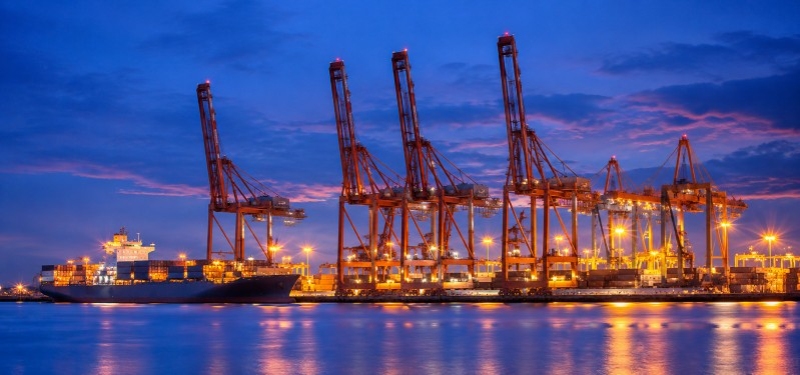
Industrial rail infrastructure is different from conventional railway construction. In factories, ports, steel plants, mining facilities, power plants, logistics terminals, and heavy industrial sites, rail tracks often operate under demanding conditions that combine high axle loads, frequent shunting, vibration, impact, heat, dust, chemicals, and continuous production schedules.
For these applications, choosing an Industrial Rail System Contractor is not simply a matter of finding a company that can supply rail fasteners. The contractor needs to understand the complete track system, from rail support and fastening to installation, alignment, welding, grouting, inspection, and maintenance. A technically suitable component can still perform poorly if it is installed incorrectly or selected without considering the operating environment.
This guide explains the main factors industrial buyers should evaluate when selecting a rail system contractor and how an integrated approach can reduce installation problems and long-term maintenance requirements.
What Does an Industrial Rail System Contractor Do?
An industrial rail system contractor supports the engineering, supply, installation, and maintenance requirements associated with rail tracks used inside or around industrial facilities.
The scope can vary considerably from project to project. A small project may only require rail fastening components and installation assistance. A larger project may involve track steel, rail clamps, soleplates, rubber pads, fastening assemblies, grouting, rail welding, turnout components, and ongoing track maintenance.
A capable contractor should be able to connect these individual activities into one practical track solution.
Typical responsibilities can include:
Reviewing rail and support structure requirements
Selecting appropriate rail fastening systems
Supplying rail clamps and track fastening components
Providing soleplates, rubber pads, grouts, bolts, and related accessories
Supporting crane rail installation
Installing industrial track systems
Performing rail welding and joint-related work
Carrying out grouting beneath rail support components
Supporting turnout installation
Inspecting installed fastening systems
Providing maintenance and replacement recommendations
This integrated approach is particularly useful when the rail system is part of a production process. Track downtime can affect material handling, crane operation, raw material movement, and overall plant productivity. Therefore, the contractor needs to consider installation quality and maintainability as well as the initial supply cost.
Why Industrial Rail Applications Require a Different Approach
Industrial tracks can experience loading patterns that differ from those found on conventional passenger railway lines.
For example, a crane rail inside a steel plant may be subjected to repeated wheel loads, lateral forces, vibration, and thermal effects. A rail track used in a coking facility may operate in an environment with elevated temperatures, dust, and demanding chemical conditions. Tracks in ports and logistics facilities can experience intensive vehicle movement and frequent braking and acceleration.
These operating conditions influence the selection of fastening components.
The rail fastening system must maintain the rail in the intended position while allowing the track structure to accommodate the forces generated during operation. Depending on the application, the system may require combinations of clamps, soleplates, pads, bolts, clips, and other components.
This is why industrial rail projects should not be approached as a simple “rail plus fastener” purchasing exercise.
Start With the Operating Conditions
Before selecting an Industrial Rail System Contractor, the project team should define the actual operating environment.
Several technical parameters are especially important.
Rail Type and Rail Section
The contractor needs accurate information about the rail profile and dimensions. Different rail sections require different fastening arrangements, support plates, clamps, and related components.
The rail profile should be confirmed from engineering drawings or verified on site rather than estimated from appearance.
Wheel Load and Traffic Frequency
Maximum wheel load is one of the basic factors affecting fastening and support requirements.
However, maximum load alone does not describe the complete operating condition. Buyers should also consider:
Number of operating cycles
Frequency of rail traffic
Travel speed
Braking and acceleration
Lateral wheel forces
Impact loading
Crane duty classification where applicable
A track with moderate individual loads but extremely frequent operation can experience significant cumulative stress.
Foundation and Support Structure
The condition beneath the rail is equally important.
Industrial rails may be installed on concrete foundations, steel structures, embedded systems, or other support arrangements. Uneven or inadequate support can transfer excessive forces to fastening components.
For this reason, an Industrial Rail System Contractor should examine the relationship between the rail, fastening system, soleplate, grout, and foundation rather than evaluating each component separately.
Environmental Conditions
The surrounding environment can strongly influence component selection.
Relevant conditions may include:
For projects in coastal areas or industrial plants with aggressive environments, corrosion resistance and protective treatments may become important selection criteria.
The Rail Fastening System Is a Complete Assembly
One common purchasing mistake is to evaluate rail fastening components individually.
A rail clamp, for example, cannot be judged only by its material or appearance. Its actual performance depends on how it interacts with the rail, supporting structure, bolts, soleplate, pads, and installation method.
A typical industrial rail fastening system may include:
The exact configuration depends on the rail type and application.
A reliable contractor should therefore be able to explain how the complete assembly works and why a particular component is being specified.
Rail Clamps and Their Role in Track Stability
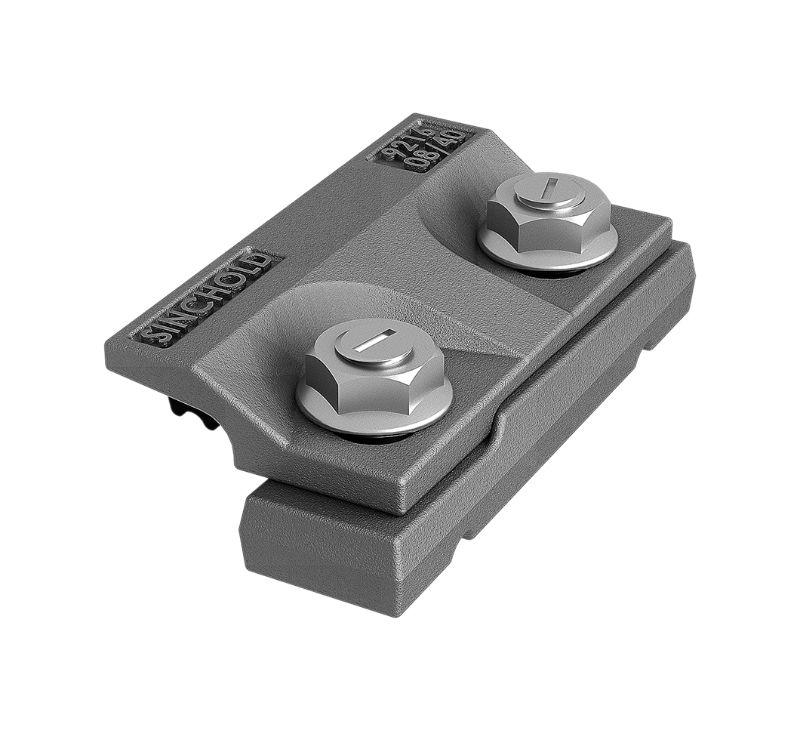
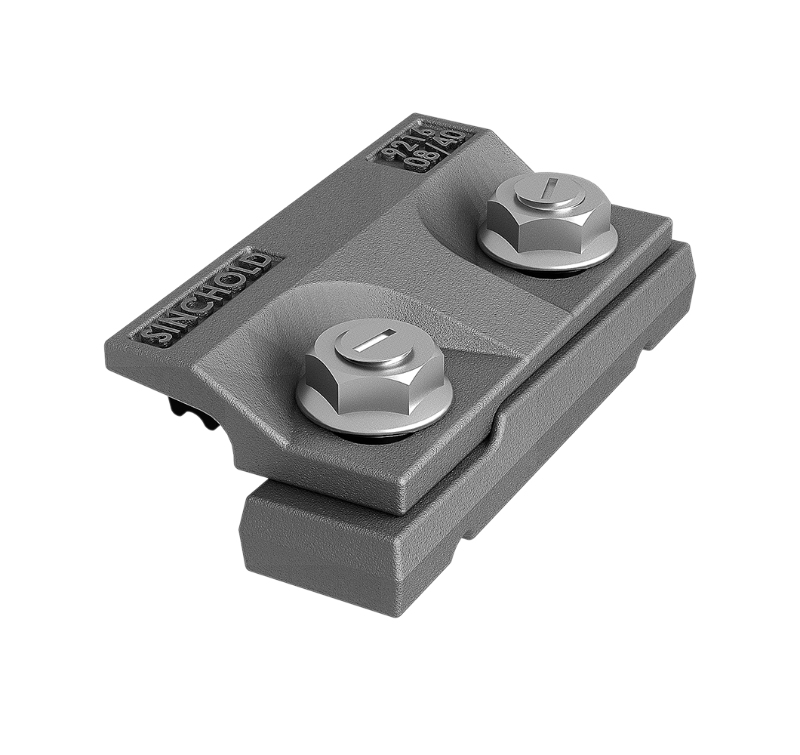
Rail clamps are widely used in industrial rail applications where the rail needs to be securely restrained while maintaining an appropriate installation configuration.
For crane rails and other industrial tracks, clamps may need to resist vertical and lateral forces generated during operation. Their design and installation also affect rail alignment and long-term maintenance.
When evaluating a rail clamp supplier or contractor, buyers should ask about:
Compatible rail sections
Material and manufacturing process
Surface treatment or corrosion protection
Fastening method
Installation requirements
Adjustment capability
Inspection procedures
Replacement availability
The goal is not necessarily to choose the most complicated clamp. It is to select a fastening arrangement that matches the actual load and operating requirements.
Soleplates and Rubber Pads Matter More Than They Appear
Soleplates provide a controlled interface between the rail and its supporting structure. They can help distribute loads and establish the intended rail position.
Rubber pads or resilient pads can provide additional functions depending on the system design, including load distribution, vibration reduction, and adjustment of the interface between rail and support.
Their properties need to be considered together with the complete fastening system.
A contractor that supplies soleplates and pads should understand their dimensions, material characteristics, installation position, and compatibility with the selected rail section. Incorrect dimensions can create installation difficulties even when the individual components meet their nominal specifications.
Grouting and Foundation Preparation
Grouting is another area where installation quality has a direct effect on rail performance.
When rail support components are installed over concrete foundations, gaps or irregularities between the support plate and foundation may need to be addressed using an appropriate grout system. The objective is to establish stable and uniform support.
Poor grouting practices can result in:
An experienced Industrial Rail System Contractor should consider grout selection and installation as part of the rail system rather than treating it as an unrelated construction activity.
Surface preparation, mixing, placement, curing, and inspection all matter.
Rail Welding and Track Installation
Rail welding can reduce the number of joints and provide a continuous rail configuration where the application requires it.
However, welding is a specialist operation. The welding method, rail material, joint preparation, temperature, alignment, and post-welding inspection can all influence the final result.
Industrial rail installation may also require careful control of:
Rail alignment
Rail elevation
Gauge
Joint position
Fastener spacing
Bolt tightening
Soleplate positioning
Grout condition
Rail end preparation
A contractor offering installation services should be able to provide a defined installation procedure instead of relying entirely on field experience without documentation.
Turnouts Require Additional Attention
Railway turnouts are more complex than straight track sections because they involve multiple rail components and controlled wheel paths.
Industrial facilities may use turnouts for internal material movement, sidings, storage tracks, production lines, or connection between different rail routes.
Turnout projects require coordination between rail geometry, fastening components, installation tolerances, and operational requirements.
The contractor should verify the turnout configuration, rail section, installation conditions, and connection details before manufacturing or supplying components.
Track Cleats, Fish Plates, and Bolts
Small components can create significant maintenance issues when they are incorrectly selected or installed.
Track cleats can contribute to rail restraint and positioning. Fish plates are commonly used for rail joint connections in applications where jointed rail is required. Bolts provide the mechanical connection for many rail system components.
For procurement teams, it is useful to maintain clear component identification based on drawings, rail profiles, dimensions, material requirements, and application.
This reduces the risk of receiving components that appear visually similar but are not interchangeable.
Quality Control Should Begin Before Delivery
Quality control in industrial rail projects should not start when the components arrive at the jobsite.
An effective quality process begins during design and procurement.
The buyer should review:
During manufacturing, inspection can include dimensional checks, material verification, visual inspection, and other tests appropriate to the component.
Before shipment, components should be properly identified and packed to prevent damage and mixing during transportation.
For large projects, clear documentation can save substantial time during installation.
Manufacturing Capability Is an Important Selection Factor
There is a difference between a trading company that sources individual components and an integrated manufacturer with direct control over production.
A manufacturer with its own production capability can generally provide closer coordination between product design, manufacturing, inspection, and technical support.
For industrial buyers, several questions are worth asking:
Where are the components manufactured?
Which processes are performed in-house?
How is production quality controlled?
Can the supplier manufacture customized components?
How are drawings approved before production?
How are batches identified and inspected?
Can replacement parts be supplied later?
These questions become particularly important for large projects involving multiple rail components.
Customization Should Be Based on Engineering Requirements
Industrial rail systems are not always standardized.
A project may involve an unusual rail profile, special foundation arrangement, restricted installation space, customized clamp dimensions, or particular environmental requirements.
Customization can therefore be necessary.
However, customization should begin with engineering information rather than simply modifying an existing component until it fits.
The contractor should review the rail profile, loading conditions, support structure, fastening requirements, and installation environment before proposing a customized solution.
This reduces the possibility of solving one installation problem while creating another.
Installation Support Can Reduce Procurement Risk
For international industrial projects, installation support can be particularly valuable.
A buyer may be able to purchase rail clamps and fastening components from multiple sources, but coordinating different suppliers for rail components, grouting, welding, and installation can create additional interfaces.
An integrated contractor can potentially reduce these interfaces by supplying both components and services.
For overseas projects, buyers should also evaluate the contractor's ability to provide:
Technical communication
Installation documentation
Site support
Local project coordination
Spare parts
Maintenance assistance
Response to installation questions
Localized support can be especially important when a project has strict construction schedules.
What to Ask During the Contractor Evaluation
A practical supplier evaluation can be divided into five areas.
1. Product Capability
Confirm whether the contractor can supply the required rail fastening system, including clamps, soleplates, pads, cleats, bolts, fish plates, and other components.
2. Engineering Capability
Check whether the company can review drawings, confirm component compatibility, support customization, and provide technical documentation.
3. Manufacturing Capability
Review production capacity, quality management procedures, inspection capability, and traceability.
4. Installation Capability
If installation services are required, clarify whether the contractor can support rail welding, grouting, track installation, alignment, and maintenance.
5. Project Support
For large industrial projects, evaluate communication, delivery planning, documentation, spare parts, and after-sales support.
This approach gives procurement and engineering teams a more complete basis for supplier comparison.
Why Integrated Supply and Installation Can Improve Project Coordination
When rail components and installation services are handled separately, responsibility for problems can become unclear.
For example, if a rail fastening assembly does not fit correctly during installation, the issue could originate from the drawing, component dimensions, foundation condition, or installation method. If multiple parties are involved, identifying the source can take time.
An integrated supplier can review the complete installation chain and coordinate the relevant technical information.
This does not eliminate every project risk, but it can simplify communication and make responsibility easier to establish.
Supporting Industrial Rail Projects in Different Industries
Industrial rail systems are used across a wide range of applications.
Steel Plants
Steel production facilities may use rails for cranes, material handling equipment, transfer systems, and internal transportation.
The track system may need to tolerate heavy loads, vibration, heat, and demanding operating cycles.
Ports and Terminals
Port facilities use rail systems for cranes and material-handling equipment. Corrosion resistance, installation accuracy, and maintenance access can be important considerations in these environments.
Mining Operations
Mining sites can require robust rail infrastructure for material transportation and specialized industrial equipment. Dust, heavy loads, and remote operating conditions can increase maintenance requirements.
Coking and Metallurgical Facilities
Coking and metallurgical environments may expose rail components to heat, dust, and aggressive industrial conditions. Component selection and maintenance planning should account for these operating conditions.
Manufacturing and Logistics Facilities
Factories, warehouses, and logistics centers may use internal rail systems for moving materials, machinery, or specialized equipment.
In these applications, keeping the rail system aligned and available can be directly connected to production efficiency.
Maintenance Should Be Considered Before Installation
A rail system is a long-term asset. Maintenance requirements should therefore be considered during the original design.
A practical maintenance program may include periodic inspection of:
Rail alignment
Fastener condition
Clamp tightness
Bolt condition
Soleplate condition
Rubber pads
Grout condition
Rail wear
Welded areas
Joints and fish plates
Turnout components
Signs such as abnormal wheel noise, visible rail movement, uneven wear, loose fasteners, cracking, or deterioration of grout should be investigated rather than ignored.
Early intervention can prevent a localized issue from developing into a larger track repair project.
Documentation Is Part of the Deliverable
For B2B industrial projects, documentation should not be treated as administrative paperwork.
Accurate documentation helps engineering, procurement, construction, and maintenance teams work from the same technical information.
Useful project documents may include:
Product drawings
Installation instructions
Material information
Inspection records
Quality documents
Packing lists
Component identification
Maintenance recommendations
Replacement part information
For projects involving customized components, maintaining revision-controlled drawings is especially important.
Sinchold's Approach to Industrial Rail Systems
Sinchold operates as an integrated manufacturer and solution provider for rail systems, covering R&D, design, manufacturing, technical support, and rail installation services.
Its product scope includes railway spring bar systems, railway turnout components, rail track fastening system combinations, crane track clamps, track cleats and fish plates, bolts, coking track fixing systems, track steel, and related rail components.
The company also provides track installation and maintenance services, including rail welding and grouting.
Sinchold's manufacturing facility in Nantong uses dedicated production lines supported by a total quality management system. This manufacturing base allows the company to coordinate product production with project requirements rather than relying only on third-party sourcing.
For international industrial projects, local support can also be an important consideration. Sinchold established Sinchold KSA (SFCC) in Dammam in 2024 to strengthen its presence in the Middle East and provide localized support for infrastructure projects. This regional operation supports customers that require closer coordination during procurement, installation, and project execution.
Selecting the Right Contractor for Your Project
The right Industrial Rail System Contractor should be evaluated according to the actual requirements of the rail application.
Instead of focusing only on unit price, industrial buyers should consider the complete project cost, including engineering coordination, component compatibility, installation, quality control, transportation, maintenance, and potential downtime.
A suitable contractor should be able to answer practical questions:
Can the fastening system handle the expected operating conditions?
Are the components compatible with the specified rail section?
Can the contractor manufacture or modify components when required?
Does the company have direct manufacturing capability?
Can it provide installation and maintenance services?
Are inspection and quality documents available?
Can the contractor support the project after delivery?
Is technical assistance available at the installation site?
Can the supplier support international projects and local requirements?
The answers to these questions provide a more meaningful basis for contractor selection than a product catalog alone.
Industrial rail infrastructure is a system, not a collection of independent components. Rail clamps, soleplates, pads, bolts, grouting, rail steel, welding, installation, and maintenance all influence the final performance of the track. Working with an experienced and integrated Industrial Rail System Contractor can make these elements easier to coordinate from engineering through commissioning and long-term maintenance.
For industrial facilities planning a new rail system, upgrading an existing track, or sourcing replacement fastening components, a detailed review of the rail profile, operating conditions, foundation, loading, environment, and maintenance requirements should be the starting point. From there, the contractor can develop a fastening and installation approach that matches the actual application rather than relying on a generic rail solution.
 中文
 English
 Россия
 Deutsch
 Français
 Español
 Português
 العربية


 Sinchold
 Sep 22 2026
 Sinchold


 Previous News

 Recommended news